Choose the material after the sign and location are understood
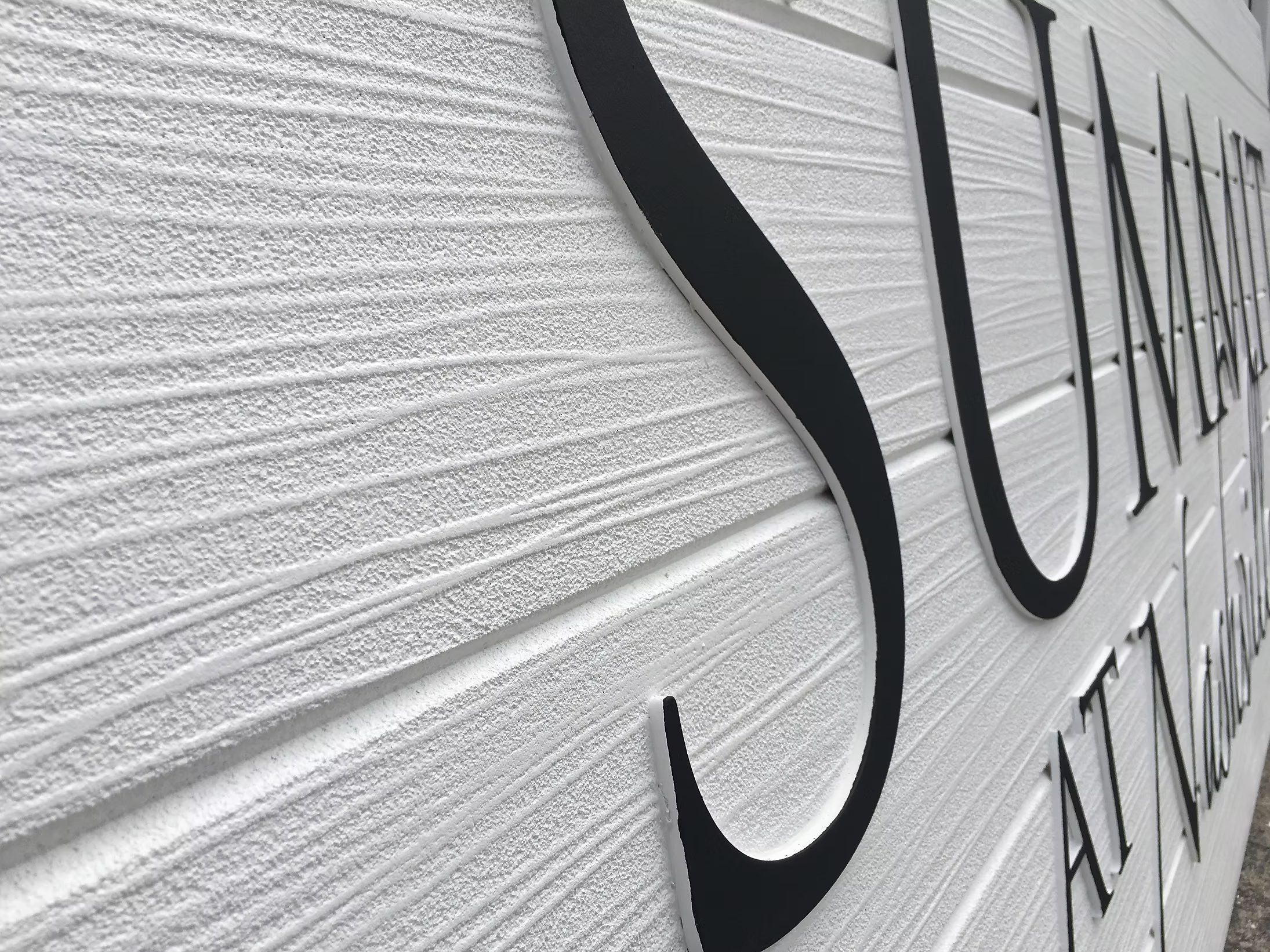
HDU, acrylic, PVC, aluminum composite and other substrates solve different problems. The correct material depends on exposure, span, thickness, routing depth, edge appearance, support and finish—not on one material being universally best.
HDU is useful for routed dimensional panels, acrylic creates crisp letters and layers, and PVC can work for selected interior or exterior components when thickness and support are appropriate. Mixed-material signs are common when each layer has a clear job.
The installer should verify structural support, expansion, attachment and code requirements. Material selection does not replace proper engineering or installation planning.
Sign formats and construction choices
High-density urethane for routed dimensional work are a practical option. This approach can be adjusted through shape, depth, edge treatment, finish and mounting so it supports either a traditional or contemporary brand.
Acrylic for crisp faces and modern details are a practical option. It works best when the artwork is simplified to the details that remain readable at the intended size. Extra effects should serve the message rather than compete with it.
Pvc and mixed-material construction for selected components are a practical option. The quote should state whether the piece is raw, primed or fully finished and whether patterns, holes, studs or other mounting preparation are included.
Details that should be confirmed before production
A frequent planning concern is density, thickness and routing depth. Clear documentation before production is less expensive than correction after material has been cut or paint has been applied.
A frequent planning concern is temperature expansion, support and fasteners. The customer, designer, manufacturer and installer should be working from the same approved revision so no one is relying on an outdated drawing.
A frequent planning concern is primer, paint, edge preparation and maintenance. When the answer depends on site conditions, the local installer or contractor should verify it in the field rather than asking the fabrication shop to guess from a photograph.
Material selection should follow the finished sign requirements
HDU, acrylic, PVC and composite assemblies can all produce professional signs, but they solve different problems. HDU is excellent for routed texture and deep exterior relief. Acrylic gives crisp edges, clean color and fine letter detail. PVC can be useful for lightweight dimensional components, especially where the design does not need the same carved depth as HDU.
Many of the strongest signs use more than one material. A routed panel can carry acrylic letters, or a logo can combine a structural backer with thinner face layers. The right choice depends on exposure, required depth, span, mounting and the visual effect—not simply which sheet material has the lowest cost per square foot.
Where this service is commonly used
How a custom sign order moves forward
Send the project information
Provide dimensions, quantity, artwork, photographs, indoor or outdoor use, required date and shipping ZIP. When a sign must fit an existing opening, include thickness and mounting details.
Same-day proof and scope confirmation
We confirm dimensions, materials, colors, mounting details and production artwork. Complete projects can receive a proof the same business day so production can move quickly after approval.
Manufacture and finish
Your sign is manufactured in the USA in our own shop. Because we are the factory, we control routing, fabrication, finishing and quality instead of handing the job to an unknown third party.
Package for the destination
We package the finished sign for shipment and deliver to customers, sign shops and installers in all 50 states.
Install locally
The customer, contractor or local sign professional receives and installs the sign. Site verification, permits, structure and local code compliance remain with the project team unless separately contracted.
Information to gather before requesting a quote
A complete request produces a faster and more accurate response. Gather the following details when they are available:
- Indoor or outdoor exposure
- Finished size and thickness
- Desired depth and texture
- Mounting surface
- Color and sheen requirements
- Expected maintenance and service access
Do not worry if every item is not available. Send the best information you have and identify what still needs to be measured or approved. We will explain which missing details are essential before fabrication and which can be decided during the quote process.
Frequently asked questions
What does HDU stand for?
High-density urethane, a closed-cell synthetic board used for routed dimensional signs.
Is HDU the same as temporary foam board?
No. It is a rigid sign substrate, not paper-faced display foam.
Is acrylic good outdoors?
It can be when thickness, attachment and expansion are properly considered.
Can PVC warp?
Thin or unsupported PVC can move with heat.
Which material lasts longest?
Design, coating, environment, mounting and maintenance all influence service life.
Can materials be combined?
Yes. Layered signs often combine a routed base with acrylic, PVC or metal-look elements.
Ready to discuss your sign?
Send the measurements, artwork, photographs and shipping ZIP. We will review the project and identify the next information needed for a clear quote.
Request a Custom Quote